In American schools there’s a hidden epidemic that happens every three minutes when a student is caught vaping. Health experts have labelled teenage vaping a full-blown crisis as well, with the CDC reporting that over 40% of high school students and 20 percent of middle schoolers used vaping e-cigarettes. A majority (99 percent) of them have nicotine, a chemical that is addictive and rewires developing brains and often serves as a gateway to cigarette smoking. Teachers, parents, and administrators face mounting pressure to be proactive. The vape detector is a sophisticated gadget that has become an essential item for every campus. Triton as well as 3D Sense, among the leading vape detectors in schools can do more than just sound an alert.
How do Vape Detectors perform: Accuracy without Intrusion
Modern smoke sensors for vapes like the Triton ULTRA Smart Safety sensors don’t rely upon cameras or audio recordings to guarantee 100% security and privacy, yet providing useful information. Instead, it employs advanced particulate sensors to analyze air in real time. When vape aerosols, cigarette smoke, marijuana vapor, or even masking agents (like heavy perfumes) show up the device will send instant notifications by text or email to a designated team. False positives are incredibly low and give administrators the assurance that every alert needs immediate attention.
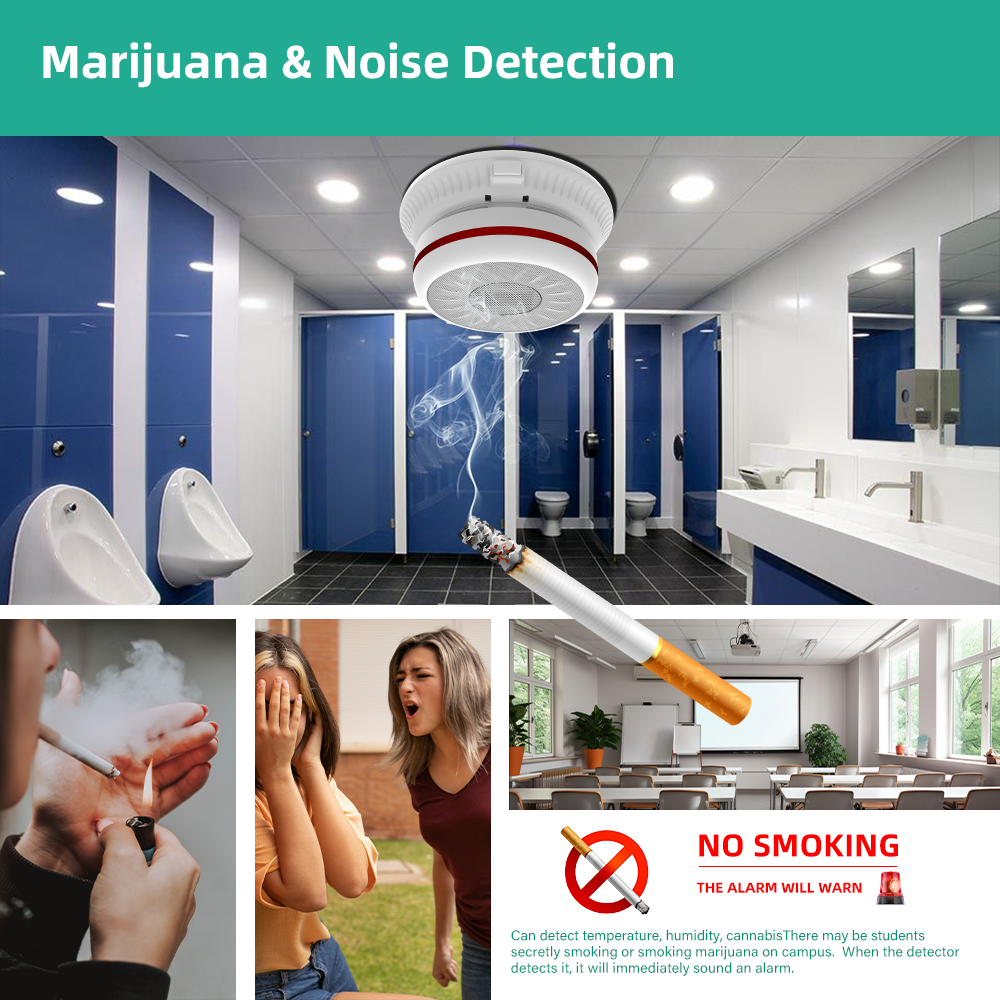
One unit covers an entire room’s bathroom, locker room, or hallway making deployment economical. Triton users usually mention that vaping incidents have reduced significantly in the first five weeks after installation. The reason? Data-driven deterrence. The Triton Cloud Dashboard shows “hotspots” in which vaping is the most popular and when. Principals can direct hall monitors and security personnel to where they are needed.
Beyond Detection, Occupancy Visibility and Loitering control
Triton’s patent-pending technology for occupancy visualization differentiates it from other vape detectors. With no sound or images or sound, the ULTRA sensor keeps track of the number of people as well as the duration of their stay in these zones. Administrators can see the heatmaps in color that indicate the time when bathrooms have turned into popular places for socializing and where vaping is common.
Stanford Medicine’s study highlights the significance of this issue: Students who vape have a five-fold higher risk of contracting COVID-19. Vape detectors at schools can improve the quality of air by reducing number of people. They also reduce the risk of transmission for airborne pathogens. Following the outbreak, these devices have become essential due to their dual benefits.
Transforming Data into Discipline and Dialogue
The numbers tell a compelling story. The reports module of Triton provides precise evidence of incident timestamps and places. It also provides patterns in frequency. Schools can share the information to school boards, parents groups or even to students. The skepticism decreases when the campus has 60% less detections following the installation of detectors. Parents will be able to see that the students are involved; they are also aware of the consequences.
Teachers can increase the impact of their message by announcing the existence of vape smoke detectors from day one. 3D Sense, for example is advertised as a preventative. “Let students know that the air itself is watching,” guidance materials advise. Peer accountability follows: the social impact of triggering an alert often is more effective than any lecture.
A Multi-Front Strategy Schools Can’t Ignore
Vape detectors are not the only instrument that can stop vaping. They anchor a comprehensive strategy.
Monitoring – Real-time alerts identify events in the middle of.
Education – Research-based evidence fuels the anti-vaping curriculum.
Deterrence- Visible signage with known consequences could alter behavior.
Discipline – Hotspot data justifies targeted enforcement.
Support Schools can pair detectors with cessation services to help struggling students.
The CDC emphasizes that changing the trend is a matter of “buy-in from parents, educators, and society.” Vape devices provide an important missing element: immediate, objective feedback that transforms good intentions into concrete outcomes.
Deployment made simple
The process of registering devices takes only minutes in the Triton Cloud Dashboard. Administrators are able to customize the rules for notification and add contacts. A demo will demonstrate how intuitive it is. It is possible to schedule a demo and see the live hotspot maps and graphs in motion.
Conclusion
Every puff you don’t take is a risk to a lifetime of addiction. Every undetected bathroom gathering risks both health and safety. Vape detectors for schools like Triton and 3D Sense offer more than surveillance they deliver intelligence, deterrence, and proof of progress. The campuses that install them aren’t just reacting to the epidemic of vaping They are taking back control.
With just one sensor for every space, privacy-safe insights into occupancy and alarm systems that are quick to respond, these tools transform vague worries into real-world victories. In a time when 40 percent of high schoolers have already experimented with middle-schoolers, and their numbers are rising daily, waiting longer makes sense. It is your turn to be the first to know what the air at your school is declaring.